A bespoke aquarium is much more than a glass tank filled with water and fish. It is a carefully planned living display that combines interior design, aquatic biology, specialist equipment and creative aquascaping. When designed correctly, a custom aquarium can transform an ordinary room into a distinctive and calming environment.
Bespoke aquarium design gives you the freedom to create a system around your available space, preferred style and intended livestock. Instead of adapting your ideas to the dimensions of a standard aquarium, the tank, cabinetry, filtration and aquascape can be developed as one complete installation.
The journey from an initial idea to a finished aquascape involves several important stages. These include consultation, site assessment, concept development, technical planning, aquarium manufacture, equipment selection, installation, cycling and the gradual introduction of livestock.
Understanding this process helps you make informed decisions, establish a realistic budget and avoid problems that could affect the aquarium’s appearance or long-term health.
What Is a Bespoke Aquarium?
A bespoke aquarium is designed and manufactured for a particular client, property or commercial space. Its dimensions, shape, materials and supporting structure can be customised to suit the intended location.
Unlike a standard aquarium purchased from a shop, a bespoke system can be integrated into a wall, positioned within an alcove, used as a room divider or built into specially designed furniture. It may become part of a reception desk, home office, restaurant, hotel lobby or luxury living area.
The internal design can also be customised. Some clients prefer a densely planted freshwater aquascape, while others want a minimalist arrangement of stone, a colourful tropical community or a dramatic marine display.
A truly bespoke service considers both the visible aquarium and the equipment required to support it. Filtration, heating, lighting, pipework, electrical connections and maintenance access should all be incorporated into the design.
The result should look attractive while remaining stable, practical and appropriate for its inhabitants.
Stage One: Developing the Initial Idea
Every bespoke aquarium begins with an idea. You may have seen an inspirational aquascape online, visited a venue with a feature aquarium or identified an empty area in your property that needs a focal point.
At this stage, the concept does not need to be technically detailed. It may simply be a preferred size, colour palette or general style. You might want a natural planted aquarium, a modern architectural display or a vibrant community tank.
Images can be extremely helpful during the initial discussion. Reference photographs allow the aquarium designer to understand the atmosphere, materials and level of planting you prefer. However, they should be used as inspiration rather than exact templates.
Every aquarium develops according to its dimensions, materials and living contents. Plants grow, fish move and natural features change over time. A successful bespoke design creates the desired visual character while respecting the practical requirements of a living ecosystem.
Think about what you want the aquarium to achieve. It might provide relaxation within a home, create a welcoming atmosphere in a reception area or become a statement feature for customers and visitors.
Your objectives will influence the aquarium’s location, scale, lighting and overall design.
Stage Two: Establishing a Realistic Budget
Discussing the budget early helps the designer recommend appropriate options. Bespoke aquarium costs vary considerably according to tank size, materials, cabinetry, filtration, aquascaping and installation complexity.
The budget should cover the entire system, not just the aquarium itself. It may need to include design work, manufacturing, delivery, installation, filtration, heating, lighting, substrate, decorations, plants, water preparation and aftercare.
Additional construction may be required for built-in installations. Carpentry, electrical work, plumbing, ventilation, plastering or structural support can add to the overall project cost.
Livestock and ongoing maintenance should also be considered. A large or advanced system may need regular professional care, replacement filter media, water treatments and specialist foods.
A clear budget allows important resources to be allocated to reliable life-support equipment. It is usually better to to simplify decorative features than compromise on filtration, safe support or maintenance access.
Your designer can explain which elements have the greatest effect on price and suggest alternatives that retain the overall vision.
Stage Three: The Aquarium Design Consultation
The design consultation turns the initial idea into a more structured proposal. The aquarium specialist will discuss your preferred style, approximate dimensions, livestock interests and level of involvement in future maintenance.
You may be asked whether you prefer freshwater, tropical, planted or marine livestock. If you are unsure, the designer can explain the benefits and responsibilities associated with each option.
Freshwater community aquariums can provide colour and movement while remaining relatively manageable. Planted aquascapes create a natural appearance but may require more attention to lighting, nutrients and plant growth.
Marine aquariums can offer striking fish and corals, although they generally need more equipment, closer water monitoring and a higher budget.
The consultation should also cover practical matters. How frequently can the aquarium be maintained? Will you perform routine care yourself, or would you prefer a professional maintenance package? Are there particular fish you want to keep? Will the aquarium need to operate within a busy commercial environment?
These questions help ensure that the completed installation suits your lifestyle rather than becoming unnecessarily difficult to manage.
Stage Four: Site Survey and Location Assessment
A site survey is an important part of bespoke aquarium planning. The proposed installation area must be measured and assessed before the tank is designed or manufactured.
The survey should consider floor strength, access routes, electrical supplies, water access, drainage and ventilation. It should also identify nearby heat sources and natural light.
Direct sunlight can increase algae growth and cause unwanted temperature changes. Radiators, fireplaces and external doors may also create temperature instability.
The weight of the finished aquarium must be calculated carefully. Water alone weighs approximately one kilogram per litre. The glass, supporting frame, cabinet, substrate, rocks and equipment add significantly to the total.
A large aquarium installed on a suspended floor or upper level may require structural assessment. The base must be flat, level and capable of supporting the entire system without movement.
Delivery access must also be checked. Doorways, staircases, corners and lifts may restrict the dimensions of the aquarium. Large tanks can require specialist handling equipment or alternative access arrangements.
Completing these checks early helps prevent costly problems during delivery and installation.
Stage Five: Choosing the Aquarium’s Position
The position of a bespoke aquarium affects how it is viewed, how easily it can be maintained and how well it integrates with the room.
A conventional aquarium placed against a wall offers a clear front view and usually allows filtration equipment to be concealed inside the cabinet. It is a practical option for many domestic installations.
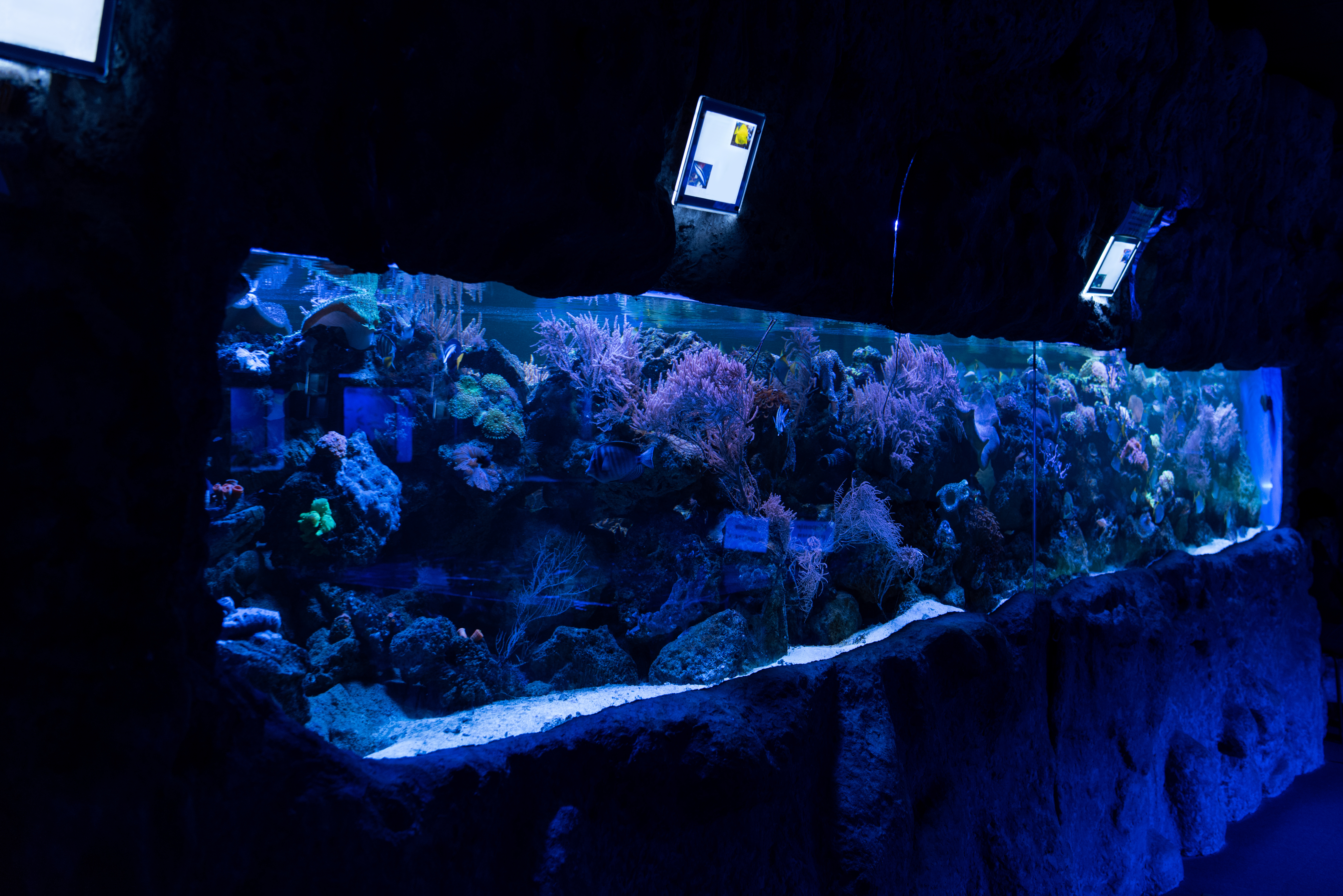
An in-wall aquarium creates the appearance of a living picture. The supporting structure and equipment can be hidden behind the wall, but sufficient service access must be included.
A room-divider aquarium can be viewed from both sides and can separate open-plan areas without blocking light completely. However, it requires careful aquascaping because equipment and decorations may be visible from several directions.
Peninsula aquariums are positioned with one end against a wall and three viewing panels exposed. They can create an impressive transition between living, dining or commercial areas.
The aquarium should be placed where it can be enjoyed without obstructing movement. It must also remain accessible for feeding, water changes, glass cleaning and equipment repairs.
A beautiful location is only successful if the system can be maintained safely.
Stage Six: Selecting the Dimensions and Shape
Bespoke design provides greater control over the aquarium’s proportions. The length, height and depth can be adjusted to suit the room and intended livestock.
Long aquariums provide valuable swimming space and are well suited to active or schooling fish. They also allow the aquascaper to create broad, landscape-style compositions.
Deep aquariums provide more room for arranging rocks and wood from front to back. This can create a stronger sense of perspective, although increased depth may make the rear of the tank harder to reach.
Tall aquariums can create a dramatic architectural feature, but they require careful planning. Lighting must penetrate the full water depth, the glass may need to be thicker and routine cleaning can become more difficult.
Aquarium dimensions should be chosen around both appearance and animal welfare. A tall, narrow tank might look impressive but offer insufficient horizontal swimming room for certain fish.
Unusual shapes, curved panels and cylindrical installations are possible, although they can increase manufacturing and maintenance complexity. Standard rectangular forms often provide the greatest flexibility for aquascaping, equipment and livestock.
Stage Seven: Glass, Acrylic and Structural Design
Most aquariums are constructed from glass or acrylic. The correct choice depends on the tank’s dimensions, shape and installation requirements.
Glass is durable, resistant to scratching and commonly used for domestic aquariums. Low-iron glass can be selected for viewing panels to provide greater clarity and reduce the green tint sometimes visible in standard glass.
Acrylic is lighter and can be formed into curved or unusual shapes. It is often used for large bespoke displays, although it can scratch more easily and requires suitable cleaning equipment.
The aquarium manufacturer will calculate the appropriate material thickness, bracing and joint design. These specifications must account for the pressure created by the full water volume.
The supporting cabinet or metal frame must also be engineered correctly. Decorative cabinetry should never be expected to carry the aquarium unless it has been designed for the load.
For built-in projects, the support system may be installed before decorative walls and finishes are completed.
Stage Eight: Designing the Cabinetry
Bespoke cabinetry helps the aquarium blend naturally with its surroundings. It can be finished to coordinate with existing furniture, flooring or architectural details.
The cabinet may be painted, veneered, laminated or manufactured from other moisture-resistant materials. Its external appearance should complement the interior, but its structural and practical functions are equally important.
Inside the cabinet, there must be enough room for filters, sumps, controllers, dosing equipment, food and maintenance tools. Ventilation may be required to prevent excessive heat and moisture from building up.
Doors and removable panels should provide unrestricted access. Filters, pumps and other equipment will eventually need to be cleaned, repaired or replaced.
An attractive cabinet with limited access can make routine maintenance unnecessarily difficult. The internal layout should therefore be planned before the cabinetry is manufactured.
Stage Nine: Planning the Filtration System
Filtration is the life-support system of the aquarium. It removes suspended waste, provides space for beneficial bacteria and helps maintain stable water conditions.
The correct filter depends on the aquarium’s volume, livestock and expected biological load. Smaller freshwater installations may use internal or external filters, while larger bespoke systems often benefit from sump filtration.
A sump is a separate container, normally positioned beneath the aquarium or in a nearby service area. Water flows from the display into the sump, passes through filtration equipment and is pumped back to the aquarium.
Sumps can provide significant filtration capacity and keep heaters, pumps and other equipment out of the visible display. They can also make maintenance and future upgrades easier.
Marine systems may need protein skimmers, specialist circulation pumps and additional water-treatment equipment. Planted aquariums may require carbon dioxide injection and carefully controlled water movement.
The filtration system should be powerful enough for the intended livestock without creating excessive flow. It should also operate quietly, particularly in bedrooms, offices and living areas.
Stage Ten: Heating, Lighting and Environmental Controls
Aquarium temperature must remain suitable and stable. Tropical freshwater and marine systems normally require thermostatically controlled heating.
Larger installations may use multiple heaters or external controllers. Using more than one heater can distribute warmth and provide limited backup if a unit fails.
The lighting specification depends on the aquarium type. A fish-only freshwater display may need moderate LED lighting, while live plants require light of suitable intensity and spectrum.
Advanced planted aquascapes may use programmable lighting with gradual sunrise and sunset periods. Reef aquariums require specialist equipment capable of supporting photosynthetic corals.
Lighting should enhance the display without overheating the water or encouraging uncontrolled algae. A timer or programmable controller provides consistency.
Optional technology can include automatic feeders, dosing pumps, leak sensors, temperature alarms, automatic top-up systems and remote monitoring. These features can improve convenience, but they must remain accessible for maintenance.
Automation reduces repetitive work; it does not remove the need for observation and regular care.
Stage Eleven: Developing the Aquascape Concept
The aquascape is the visual landscape created inside the aquarium. It may use rocks, wood, substrate and plants to represent mountains, forests, riverbanks or other natural environments.
The designer may begin with sketches, reference images or a layout created outside the tank. Important features are positioned according to the viewing angles and aquarium proportions.
Aquascaping is not simply a matter of placing attractive materials inside the water. The composition must consider balance, scale, depth and negative space.
Large features are normally positioned first. Smaller stones, branches and plants are then used to connect the composition and create a more natural transition.
The layout must also support the intended livestock. Caves, shaded areas, open swimming zones and territorial boundaries may be incorporated according to species requirements.
Maintenance access should remain possible. Densely packed rocks can trap waste, while plants positioned too close to the glass may become difficult to trim.
The best aquascapes combine visual impact with animal welfare and long-term practicality.
Stage Twelve: Choosing Substrate, Rock and Wood
Substrate forms the foundation of the aquascape. Options include sand, gravel and specialist planted aquarium soils.
The correct substrate depends on the livestock and planting plan. Root-feeding plants may benefit from nutrient-rich soil, while fish that sift or burrow may require fine, smooth sand.
The colour of the substrate also influences the appearance of the aquarium. Dark materials can intensify the colours of some fish, while light sand can produce a bright, open appearance.
Aquarium-safe rocks can create height, texture and structure. Some rocks affect water hardness or pH, so they must be selected according to the intended livestock.
Natural aquarium wood provides organic shapes and valuable hiding areas. It can also support mosses, ferns and other plants. Some wood releases tannins that tint the water, which may be desirable in a natural biotope but unsuitable for a bright display.
All materials must be cleaned and prepared appropriately. Heavy rocks should be positioned securely so they cannot move or damage the glass.
Stage Thirteen: Selecting Aquarium Plants
Plants bring colour, texture and movement to a freshwater aquascape. They can soften hardscape materials and help the layout develop into a natural-looking environment.
Plant selection should be based on lighting, carbon dioxide, nutrient availability and the experience of the person maintaining the aquarium.
Low-demand plants are suitable for simpler systems. Species such as Java fern, Anubias and many Cryptocoryne varieties can grow under moderate lighting and do not always require carbon dioxide injection.
More advanced aquascapes may use carpeting plants, fine-leaved stem plants and colourful red species. These often require stronger lighting, regular fertilisation, carbon dioxide and frequent trimming.
Plant height and growth habit should be considered during placement. Low plants can form the foreground, medium species create transitions and tall plants provide a background.
Newly planted aquariums may initially look sparse. Allowing space for growth helps prevent the display from becoming overcrowded later.
Stage Fourteen: Dry Installation and Aquascaping
When possible, much of the aquascape is assembled before the aquarium is filled. This stage is sometimes called the dry setup.
Substrate is shaped to create height and perspective. Rocks and wood are then positioned and secured where necessary.
The aquascaper may adjust the arrangement several times before reaching the final composition. Viewing the tank from its normal position helps identify distracting gaps, unnatural angles or areas that feel unbalanced.
Plants are normally added after the hardscape has been completed. The aquarium may be lightly misted during planting to prevent exposed plants from drying out.
Equipment outlets and intakes are positioned to provide effective circulation while remaining as discreet as possible. The design must avoid areas where waste is likely to collect.
Once the layout has been inspected, water is added carefully to avoid disturbing the substrate.
Stage Fifteen: Filling and Testing the Aquarium
After installation, the aquarium and filtration system must be filled, inspected and tested. Pipework, seals and connections should be checked for leaks.
The filter, heater, lighting and circulation equipment are then operated and adjusted. Water flow should reach the entire aquarium without disturbing plants or creating unsuitable conditions for fish.
Freshwater must be treated appropriately before livestock is introduced. Marine water must be prepared to the correct salinity using suitable purified water and marine salt.
Initial cloudiness is common when a newly aquascaped aquarium is filled. Fine substrate particles and small air bubbles normally settle or are removed by filtration.
The completed system should be observed carefully during its early operation. Temperature, water level, equipment noise and flow patterns may need minor adjustments.
Stage Sixteen: Cycling the Aquarium
A newly installed aquarium is not immediately ready for a full population of fish. Beneficial bacteria must become established within the filter and other surfaces.
These bacteria process ammonia produced by livestock, uneaten food and decomposing material. Ammonia is converted into nitrite and then into nitrate.
Both ammonia and nitrite are dangerous to fish. The aquarium must therefore complete its biological cycling process before it is fully stocked.
Water tests are used to monitor ammonia, nitrite, nitrate and other relevant parameters. The cycling period varies according to the system and method used.
Rushing this stage can cause serious water-quality problems and livestock losses. A responsible installation plan includes time for biological maturation and gradual stocking.
Planted aquariums may also need an establishment period before fish are introduced. Plants must develop roots, and early algae or nutrient imbalances may require attention.
Stage Seventeen: Introducing Fish and Livestock
Livestock should be selected according to the aquarium’s mature size, temperature, water chemistry and aquascaping style.
Fish should not be chosen on colour alone. Their adult size, social behaviour, swimming requirements and compatibility must all be considered.
Schooling fish should usually be kept in appropriate groups. Territorial species need sufficient space and visual boundaries, while bottom-dwelling fish may require a particular substrate.
New livestock should be introduced gradually. Adding too many animals at once can overwhelm the biological filtration.
Careful acclimatisation helps reduce stress caused by differences in temperature or water chemistry. Quarantine may also be recommended to reduce the risk of introducing parasites or illness.
The designer or aquatic specialist can develop a stocking plan that introduces species in a suitable order. Some territorial fish should be added after more peaceful inhabitants have settled.
Responsible stocking protects animal welfare and contributes to a more balanced display.
Stage Eighteen: The Finished Aquascape
A finished aquascape begins to show the original concept in its completed form, but it will continue to change. Plants grow, fish establish their behaviour and natural surfaces develop.
A newly planted aquarium may take several weeks or months to reach its intended appearance. Regular trimming encourages plants to become denser and helps maintain the shape of the composition.
The final display should look integrated with the surrounding room. Cabinetry, lighting and concealed equipment contribute just as much to the overall impression as the aquascape itself.
The most successful bespoke aquariums feel calm and intentional. Every visible element has a purpose, while the technical equipment operates discreetly in the background.
Stage Nineteen: Ongoing Maintenance and Aftercare
Completion of the installation is the beginning of aquarium ownership, not the end of the project. Every aquarium needs consistent care.
Routine maintenance includes partial water changes, glass cleaning, water testing, filter servicing and observation of fish health. Planted aquariums also require trimming, fertilisation and occasional replanting.
Equipment should be inspected regularly. Pumps, heaters, lighting and automatic systems can eventually wear or fail.
The maintenance schedule depends on aquarium size, stocking level, feeding, plant growth and filtration. Some systems need weekly attention, while others may operate successfully with a different professionally planned schedule.
Professional maintenance can be particularly valuable for large aquariums, commercial displays and clients with limited time. Regular visits help preserve the appearance of the aquascape and identify developing issues early.
A maintenance agreement may include water testing, water changes, algae removal, plant care, equipment inspections and fish health assessments.
Common Bespoke Aquarium Design Mistakes
One common mistake is prioritising appearance over maintenance access. Equipment hidden behind permanent panels may be impossible to service properly.
Another is selecting an aquarium before researching the intended fish. The tank may eventually be too small or have unsuitable proportions for the species.
Insufficient filtration can create persistent water-quality problems. Equipment should be selected according to the expected biological load rather than the tank’s volume alone.
Excessive lighting is another frequent issue. Powerful lights can encourage algae when plant growth, carbon dioxide and nutrients are not balanced.
Failing to consider the total weight can place both the aquarium and property at risk. Large systems require appropriate support and, where necessary, professional structural advice.
These problems are much easier to prevent during the design stage than correct after installation.
Why Choose Professional Bespoke Aquarium Design?
A professionally designed aquarium brings the technical and creative elements together. The tank, filtration, lighting, cabinetry, aquascape and livestock plan are developed as parts of one system.
Professional planning can reduce expensive mistakes, improve maintenance access and create more stable conditions for livestock. It is particularly important for large, built-in, planted and marine installations.
An experienced aquarium designer can also coordinate with builders, electricians, plumbers and interior designers. Early collaboration ensures that the necessary services and structural support are included before other construction work is completed.
Professional installation does not remove every challenge associated with fishkeeping, but it provides a much stronger foundation for long-term success.
Create Your Bespoke Aquarium with Matthews Aquatic Paradise Ltd
Matthews Aquatic Paradise Ltd provides professional bespoke aquarium design, installation, aquascaping and maintenance for residential and commercial clients throughout the UK.
Every project begins with an understanding of your available space, preferred style, budget and intended livestock. From the initial concept and equipment specification to installation and aftercare, each stage can be planned around the long-term health and practicality of the aquarium.
Whether you want a natural planted display, an elegant tropical community aquarium or a striking feature installation, Matthews Aquatic Paradise Ltd can help transform your initial idea into a finished aquatic environment.
To discuss your bespoke aquarium project, visit www.matthewsaquaticparadise.co.uk, email info@matthewsaquaticparadise.co.uk or call 0330 043 6994.
Aquarium requirements vary according to system size, equipment, water chemistry and livestock. Always research the individual needs of each species and seek appropriate professional or veterinary advice when necessary.