
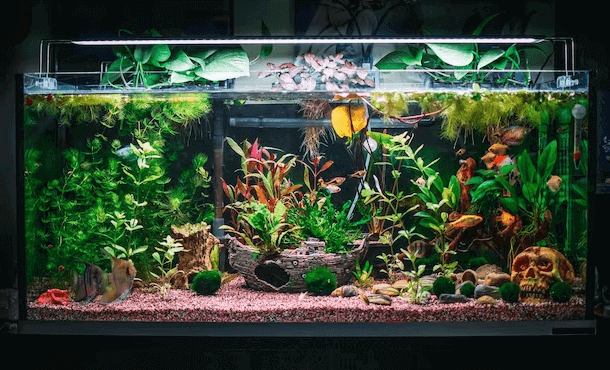
Creating a lush green carpet across the foreground of an aquarium is one of the most impressive aquascaping effects you can achieve. A healthy carpet can transform an ordinary planted tank into a beautiful underwater landscape.
However, growing aquarium carpet plants successfully requires the right combination of lighting, nutrients, carbon dioxide, substrate, planting and maintenance.
At Matthew’s Aquatic Paradise Ltd, we help aquascapers create beautiful planted aquariums and understand how to choose plants and equipment for different aquarium designs.
What Are Aquarium Carpet Plants?
Aquarium carpet plants are low-growing aquatic plants that spread across the foreground of an aquarium.
Rather than growing tall, they remain relatively short and gradually spread sideways, creating a green lawn-like appearance.
Popular carpeting plants include:
- Dwarf Hairgrass
- Monte Carlo
- Dwarf Baby Tears
- Glossostigma
- Marsilea
- Eleocharis species
- Java Moss and other mosses for specialist layouts
Different carpet plants have different requirements, so choosing the right species for your aquarium is important.
1. Choose the Right Carpet Plant
The first step is selecting a plant that matches your aquarium conditions.
Consider:
- Aquarium size
- Lighting strength
- CO₂ availability
- Substrate
- Nutrient levels
- Maintenance requirements
- Desired appearance
For beginners, choosing a relatively hardy carpeting plant can make establishing a carpet easier.
Some plants are more demanding and may require strong lighting and reliable CO₂ injection to achieve dense growth.
2. Use a Suitable Substrate
A good substrate provides the foundation for a healthy planted aquarium.
Aquarium plants need access to nutrients, particularly through their roots. A quality planted-tank substrate can help provide the conditions required for strong root development.
Avoid creating an excessively deep foreground if the chosen carpet plant does not require it.
A gentle slope can also make the aquascape look more natural and create additional depth.
3. Provide Adequate Lighting
Lighting is one of the most important factors when growing carpet plants.
Carpet plants generally need enough light to grow horizontally rather than stretching upwards towards the surface.
Insufficient lighting can result in:
- Tall or leggy growth
- Sparse coverage
- Slow spreading
- Plants becoming shaded
- Weaker growth
However, simply increasing lighting isn’t always the answer. Higher light levels can increase the aquarium’s demand for CO₂ and nutrients.
The goal is to create a balanced environment rather than simply using the strongest possible light.
4. Consider CO₂ Injection
CO₂ can make a significant difference when growing demanding carpet plants.
Carbon dioxide is used by aquatic plants during photosynthesis. In a well-maintained planted aquarium, consistent CO₂ availability can encourage faster and denser plant growth.
CO₂ is particularly useful for demanding carpeting species and high-light aquascapes.
If you’re new to planted aquariums, it’s important to understand how lighting, CO₂ and nutrients interact before significantly increasing lighting intensity.
5. Plant Carpet Plants Correctly
How you plant your carpet can affect how quickly it spreads.
Avoid planting one large clump in a single location. Instead, divide the plant into smaller portions.
Using aquascaping tweezers, carefully plant small portions throughout the foreground.
Leave enough space between portions for the plants to spread.
Over time, the individual sections should send out runners or new growth and gradually join together.
6. Don’t Plant Too Deep
One common mistake is pushing carpet plants too deeply into the substrate.
Plant the roots securely while keeping the growing points close to the surface.
If the plant is buried too deeply, it may struggle to establish or begin to rot.
Aquascaping tweezers are particularly useful because they allow you to position small plants accurately without disturbing the surrounding substrate.
7. Maintain Stable Water Conditions
Healthy plants benefit from stable aquarium conditions.
Regularly monitor important parameters such as:
- Temperature
- pH
- Ammonia
- Nitrite
- Nitrate
- Water hardness
Avoid making unnecessary large changes to aquarium conditions.
A stable environment gives plants time to establish their root systems and adapt to the aquarium.
8. Provide the Right Nutrients
Aquarium plants require nutrients to grow.
Depending on the aquarium and substrate, plants may benefit from both macro and micronutrients.
Important nutrients include:
- Nitrogen
- Phosphorus
- Potassium
- Iron
- Trace elements
A good fertilisation routine should be based on the plants, lighting, CO₂ availability and overall aquarium conditions.
More fertiliser does not automatically mean faster growth. Excess nutrients combined with unsuitable lighting or CO₂ levels can contribute to algae problems.
9. Give Your Carpet Time to Establish
One of the biggest mistakes new aquascapers make is expecting an instant carpet.
Carpet plants need time to establish roots and spread.
During the early stages, the aquarium may look quite sparse. This is normal.
With suitable conditions, new shoots and runners can gradually spread throughout the foreground.
Patience is an important part of successful aquascaping.
10. Trim Your Carpet Plants
Once your carpet begins growing, regular trimming can help maintain a dense appearance.
If plants become excessively tall, trim them carefully rather than allowing them to block light from reaching the lower growth.
Remove loose or dying plant material and gently clear away debris.
Regular maintenance also helps prevent the carpet from becoming too dense and trapping waste underneath it.
11. Keep Algae Under Control
Algae can be particularly noticeable on carpet plants because they grow close to the substrate.
Common causes of algae include:
- Excessive lighting
- Nutrient imbalance
- Inconsistent CO₂
- Poor circulation
- Excess organic waste
- Insufficient maintenance
Instead of simply treating the algae, look at the overall balance of the aquarium.
Regular water changes, appropriate lighting duration, good circulation and consistent plant growth can all help maintain a healthier planted aquarium.
12. Don’t Disturb the Carpet
Once your carpet begins spreading, try not to repeatedly uproot or move the plants.
Frequent disturbance can damage developing roots and slow the establishment process.
When cleaning the aquarium, be gentle around the carpet.
A careful approach helps protect new growth and keeps the substrate stable.
Can You Grow Carpet Plants Without CO₂?
Yes, some carpeting plants can be grown without injected CO₂, although growth may be slower and the choice of plants becomes more important.
Low-tech aquariums can still produce attractive planted landscapes.
Hardier options and moderate lighting can make a low-tech carpet more achievable.
For demanding species, however, CO₂ injection can provide a significant advantage.
How Long Does It Take to Grow an Aquarium Carpet?
There is no single timeframe because growth depends on the plant species and aquarium conditions.
Factors include:
- Lighting
- CO₂
- Nutrients
- Substrate
- Water quality
- Plant health
- Temperature
- Initial planting density
Some carpets can begin showing noticeable spreading relatively quickly, while others can take considerably longer to completely cover the foreground.
The key is maintaining consistent conditions rather than trying to force rapid growth.
Best Aquarium Layout for Carpet Plants
Carpet plants work particularly well in aquascapes that have clear foreground, midground and background areas.
For example, you could combine:
Foreground: Monte Carlo or Dwarf Hairgrass
Midground: Cryptocoryne or smaller Anubias
Background: Vallisneria or stem plants
Add rocks or driftwood between these areas to create structure and visual depth.
This approach can create a natural-looking underwater landscape while giving each plant enough room to develop.
Common Carpet Plant Mistakes
Avoid these common problems when starting your planted aquarium:
Planting Too Deep
Keep the growing point close to the substrate surface.
Too Much Light
High lighting without sufficient CO₂ and nutrients can encourage algae.
Poor Water Circulation
Good circulation helps distribute nutrients and CO₂ throughout the aquarium.
Overcrowding
Planting too much in one area can make it difficult for individual plants to establish.
Lack of Patience
A carpet takes time. Avoid constantly replanting because growth appears slow.
Create a Beautiful Carpet Aquascape
Growing aquarium carpet plants successfully is all about balance.
Provide suitable lighting, an appropriate substrate, consistent nutrients and stable aquarium conditions. For more demanding carpets, CO₂ can help produce faster and denser growth.
With careful planting and regular maintenance, a sparse foreground can eventually develop into a lush green carpet that completely transforms your aquarium.
At Matthew’s Aquatic Paradise Ltd, we can help with aquascape design and installation, aquarium maintenance, fish consultations and aquarium health checks.
Whether you’re creating your first planted aquarium or designing an advanced aquascape, we’re here to help you create a beautiful underwater environment.
Matthew’s Aquatic Paradise Ltd – Creating Beautiful Underwater Worlds.
Ready to Create Your Perfect Aquascape?
Explore our aquascaping services, discover different aquascape styles or contact Matthew’s Aquatic Paradise Ltd to discuss your aquarium project.

One Response
Yo, just checked out z555game after a friend’s recommendation. Pretty solid selection of games, easy to navigate. Definitely worth a look if you’re looking for something new. Check it out here: z555game